
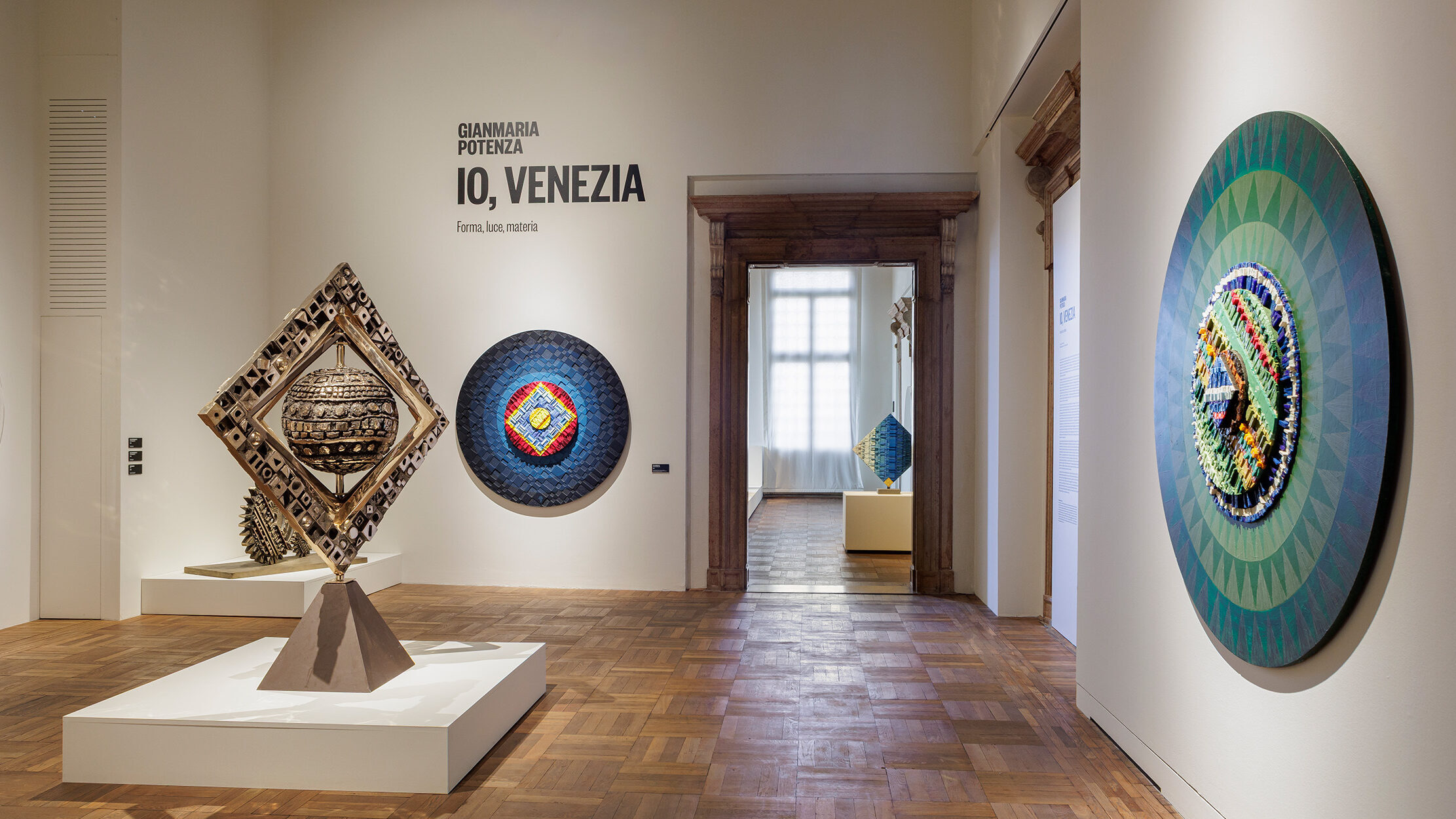
COLLATERAL EVENT OF THE EXHIBITION GIANMARIA POTENZA. IO, VENEZIA. FORMA, LUCE, MATERIA, ON VIEW FROM 3 OCTOBER TO 22 NOVEMBER 2026 AT CA’ PESARO – GALLERIA INTERNAZIONALE D’ARTE MODERNA, VENICE
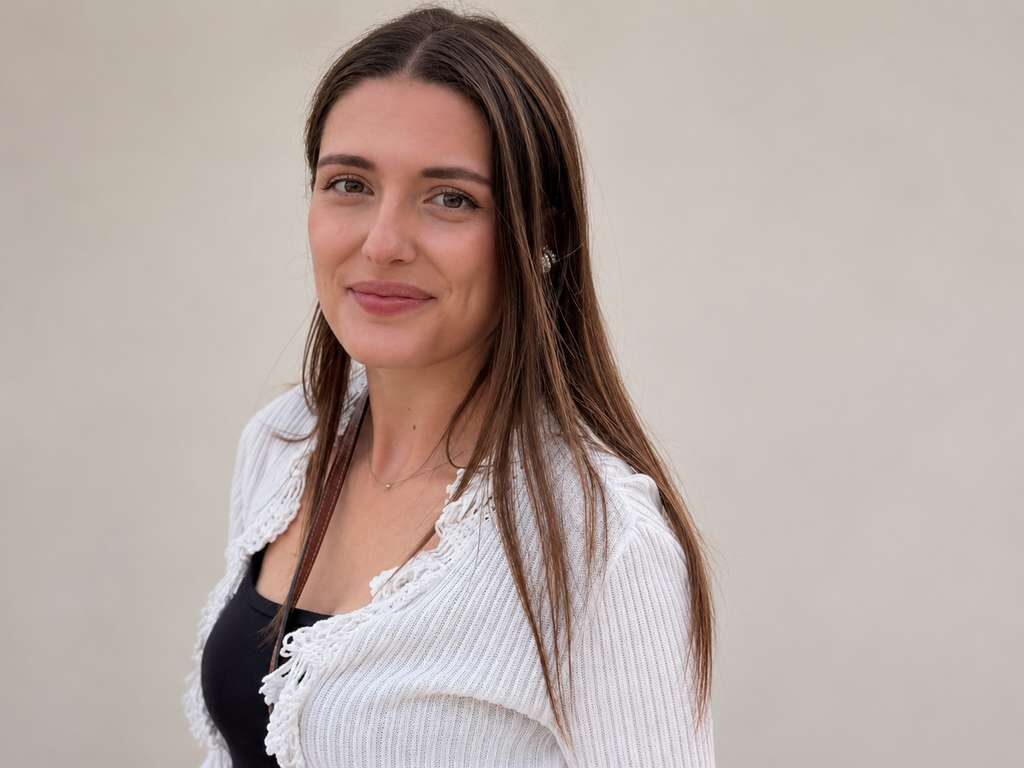
Angelica Nicole Ricca is the winner of the Poetare l’arte di Gianmaria Potenza competition, with her poem Dalle Mani.
Open to poets under 36, the competition invited participants to translate the artistic imagery of Gianmaria Potenza’s works into original, unpublished poems in Italian. The response was significant, with 68 valid submissions received from across Italy and abroad.
Given the high number of participants, the jury – composed of Gianmaria Potenza, Enzo Santese (art critic, writer and poet), Francesca Brandes (essayist and poet), Sabrina de Canio (poet and translator), and Arianna Silvestrini (member of the editorial board of Wetlands Books) – met in two sessions, ultimately deciding to award Ricca’s text for its ability to transform the encounter with Gianmaria Potenza’s work into an authentic poetic and intellectual experience. Through rigorous writing, the poem explores the relationship between order and disorientation, measure and the immeasurable, making geometry not a closed form but the place where matter, the body, and reflection open themselves to the unexpected. Through a skilful sequence of concepts, Ricca creates a circular movement that begins at dawn and returns to dawn, tracing an experiential journey undertaken by the human being and reaching the extreme point at which hands can no longer measure what lies “beyond”. Within this conceptual orbit, the hands appear as intelligent and “sentient” entities because they perform an act of faith in the fingers, the tools humans use to relate to surrounding reality or the abstractions of thought.
Angelica Nicole Ricca (2002) works in cultural planning and production, with a particular focus on performative languages and narrative construction. Her interdisciplinary background spans communication, political science, philosophy and the performing arts. Writing, and poetry in particular, represents for her an intimate space for research and observation, which she has chosen to share publicly on this occasion.
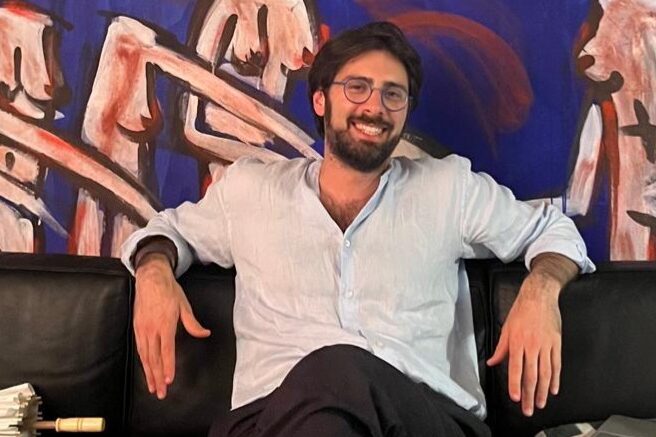
Second place went to Francesco Scardino’s poem for its originality in transfiguring Gianmaria Potenza’s work, where matter, reflection, and transience converge in a meditation on death and the possibility of language. The poem, supported by a remarkable symbolic density, allows several possible interpretations to emerge: first and foremost, the idea that poetry arises from the reality of emptiness, from horror vacui, overcome by the movement of pens, which faithfully record the author’s state of mind. It is a poem with a sustained rhythm and subtle musicality, revealing a familiarity with the work of personal construction and a sensitivity to the slightest vibrations produced by words.
Francesco Scardino (1991), who holds a doctorate in theoretical physics from the University of Rome “La Sapienza”, has always written, but only recently began transcribing and organising the work he had accumulated over the years. His scientific background shapes his language and has given rise to three distinct collections, different in structure and subject matter: one on love and its end, organised around a thematic rather than chronological thread; one on grief; and a third, more recent collection, still in progress.

Gerardo Auria placed third with the text “Residuo”, the result of a rigorous process of subtraction, on the threshold of dissolution, reducing the communicative impulse to a “residual” element of communication and transforming fracture and emptiness into poetic matter. The versification, fragmented at several points, reveals a complete adherence to the meaningful quality of an emptiness created by words, fading into an almost imperceptible sound. The text stood out for its expressive approach, far removed from verbal redundancy and fully embedded in a hermetic tension. Conceptually rigorous, it enters into dialogue with Gianmaria Potenza’s work through a dialectic between form and absence, entrusting the reader with reactivating meaning.
Gerardo Auria (2001) holds degrees in Literature and Modern Philology, with an academic background focused on medieval literature and spirituality. Alongside his academic research, he pursues creative writing and performance, participating in conferences, cultural projects, and theatrical productions. His research brings together philology, literary memory, the body, language and contemporary experimentation.
The jury also decided to award four special mentions to: Gabriele Garofalo, for Astro, in which matter, colour, light and history intertwine in a deeply sensory vision, transforming the artwork into a poetic experience and a source of wonder; Valentina Gheza, for Mondi Liquidi, in which, through corporeal and sensory imagery, she constructs a metaphor for contemporary solitude, giving the materiality of the artwork a new poetic dimension; Szimona Panyi, for Il memoriale del Sole, in which everyday Venetian life – its work, gestures and contemporary rhythms – intertwines with the silent gaze of the Sun; and finally, Pier Lorenzo Pisano, for a text centred on the poetic figure of the Sun, which becomes the origin of vision and, through geometry and matter, fragments and recomposes itself within a Venice that “tames the light”
AWARD CEREMONY
The winning entries and special mentions will be presented at the award ceremony on 15 October 2026 at Ca’ Pesaro – Galleria Internazionale d’Arte Moderna, Venice.